
The ATO is cracking down on business owners who take money or use company resources for themselves.
It’s common for business owners to utilise company resources for their personal use. The business is often such a part of their life that the line distinguishing ‘the business’ from their life can be blurred.
While there are tax laws preventing individuals accessing profits or assets of the company in a tax-free manner, mistakes are being made and the Australian Taxation Office (ATO) has had enough.
The ATO has launched a new education campaign to raise awareness of these common problems and the serious tax consequences that can arise.
What the tax law requires
Division 7A is an area of the tax law aimed at situations where a private company provides benefits to shareholders or their associates in the form of a loan, payment or by forgiving a debt. It can also apply where a trust has allocated income to a private company but has not actually paid it, and the trust has provided a payment or benefit to the company’s shareholder or their associate.
Division 7A was introduced to prevent shareholders accessing company profits or assets without paying the appropriate tax. If triggered, the recipient of the benefit is taken to have received a deemed unfranked dividend for tax purposes and taxed at their marginal tax rate. This unfavourable tax outcome can be prevented by:
- Paying back the amount before the company tax return is due (this is often done by way of a set-off arrangement involving franked dividends); or
- Putting in place a complying loan agreement between the borrower and the company with minimum annual repayments at the benchmark interest rate.
The problem areas
Division 7A is not a new area of the tax law; it has been in place since 1997. Despite this, common problems are occurring. These include:
- Incorrect accounting for the use of company assets by shareholders and their associates. Often, the amounts are not recognised;
- Loans made without complying loan agreements;
- Reborrowing from the private company to make repayments on Division 7A loans;
- The wrong interest rate applied to Division 7A loans (there is a set rate that must be used).
Like life, managing the tax consequences of benefits provided to shareholders and their associates can get messy quickly. Avoiding problems can often come down to a few simple steps:
- Don’t pay private expenses from a company account;
- Keep proper records for your company that record and explain all transactions, including payments to and receipts from associated trusts and shareholders and their associates; and
- If the company lends money to shareholders or their associates, make sure it’s on the basis of a written agreement with terms that ensure it’s treated as a complying loan – so the full loan amount isn’t treated as an unfranked dividend.
There are strict deadlines for managing Division 7A problems. For example, if the borrower is planning to repay the loan in full or put a complying loan agreement in place, this needs to be done before the earlier of the due date and actual lodgement date of the company’s tax return for the year the loan was made.
Small business productivity: Trends, implications and strategies – Part 1
This is a great article by Xero (we use Xero in our business) with our comments also added.
If you are looking for ways to grow profits, drop prices or pay staff more, then one strategy is to lift productivity in your business.
But what is productivity exactly (hint: it’s not about working longer hours), and how can you lift it in your small business or practice?
What is small business productivity?
Small business productivity is the measure of how much value a business can produce using the resources it has at its disposal (ie staff, capital, materials). It’s usually measured using the dollar-value of outputs per hour worked or per employee. To put it more simply: sales/hour or sales/employee. Generally, the higher the sales/hour, the more productive a business is.
New insights on small business productivity
Here is a great report released by Xero Small Business Insights (XSBI) report, Small business productivity: Trends, implications and strategies, looking at recent small business productivity trends across Australia, New Zealand and the United Kingdom. In addition to trends and insights, the report also provides some tips on how you can lift productivity in your business.
Measuring labour productivity isn’t new, but what’s out there is generally broader, slower to be released and covers longer periods of time (quarterly or annual). Methodologies also tend to differ. From what we can tell, this XSBI data is the first time that small business labour productivity has been measured using anonymised and aggregated data (not surveys) for small businesses only, on a monthly basis, and using the same methodology across each country.
Technology can improve productivity
One of the main findings of the report was evidence of the productivity boost small businesses can get from embracing digital tools.
General economic wisdom is that small businesses tend to have lower productivity than large businesses. But our study found that, particularly after the pandemic, small businesses tended to have higher productivity growth when compared with data covering all businesses in a country. This is a great turnaround and one we need to maintain moving forward.
One reason for this result is down to a key characteristic of the small businesses in the XSBI data set – by definition they all use at least some form of technology (like Xero) to help run their business, and they have an accountant or bookkeeper too. This finding really highlights the benefits that digital technology (or digitalisation) can deliver to small businesses that embrace it, especially with the help of their advisors. As always we are here to help us much as possible.
It also highlights the huge opportunity available to governments from policies that encourage all small businesses to embrace digitalisation in their operations.
How did the pandemic impact productivity?
Unsurprisingly, productivity in all three countries took a hit during the peak pandemic years of 2020 and 2021. Many small businesses were forced to temporarily close but still paid their staff, thanks to government wage subsidy schemes. This meant that even though businesses were paying staff, they were producing or selling much less, resulting in much lower productivity.
Once economies re-opened, sales took off but small businesses struggled to find more staff. Existing workers had to step up and lift their productivity to keep up with the surge in customers. As things settled down, this post-pandemic ‘productivity spike’ unwound due to slowing sales growth and the need to train some of the newly hired staff. Come December 2023, all three countries’ productivity has slipped below pre-pandemic averages.
This softening of productivity over 2023 adds to the economic challenges we face: how to lift economic growth and get inflation back to normal as quickly as possible. Boosting productivity is a great way to do both of these.
What does this mean for your business?
Productivity is about working smarter – it’s not about working longer hours. If you already use tech tools in your businesses, then you’re already ahead of your competitors that aren’t. But that doesn’t mean your businesses are as productive as they could be. To help understand how to lift productivity in your businesses, Xero have put together a handy guide: Increasing productivity in small business.
The steps you can take fall into five broad areas:
- Find tools that amplify your work and invest in them. You could start this by simply finding out which Xero App Store apps might be useful to add to your stack and help you run your business better
- Re-evaluate your current processes: are they really working?
- Set your workers up for success through upskilling and training
- Harness your entrepreneurial skills to build a business that operates at its full potential
- Join us at the 24th to 26th February Global Business Camps (GBC) event where productivity as well as a tools and resources will be highlighted that will help you and your business perform better.

CLICK HERE TO REGISTER NOW FOR THE GBC AND GET EARLY BIRD PRICING
You do not need to pay fully now you just need to register before June 30, 2024 and pay a small deposit to avoid missing out.
What’s next?
Wondering how your industry’s productivity compares to others?
Then stay tuned for the second part of this series, to be released later this year. It takes an even deeper dive into productivity data by looking at industry and regional level performance.
Opportunities are all around us. Some people see them, yet others do not. They are there especially at this time where cost of living and economic headwinds from all corners of the nation and globally are putting enormous stress on businesses and individuals alike.
We just need to take advantage of them!
Business that do not take the opportunities when they arise suffer, and in time, their failure rate is higher. Life is all about taking opportunities as and when they are presented.
One of those rare opportunities is investing 3 days at a Global Business Camp (GBC) working ON your business with our team and other like-minded business people from all over Australia (100% tax deductible). Now is the time to be planning and thinking about strategies that will help push your business forward.
What percentage of small businesses fail?
20% of small businesses fail in their first year, 30% fail in their second year, and 50% fail after five years. Finally, 70% of small business owners fail in their tenth year in operation.
From all the work completed in this space by the experts at Global Business Camps there are some key reasons for failure:
Reason #1 – Not in touch with what their customers want and a lack of communication
Are you asking your customers what else you can be doing for them or how happy they are? Knowing the strategies is half the battle. Right now, and moving forward, you should be doing everything you can to be front-of-mind with your customers.
Are you asking for referrals? If you do, great work. If you are not, then you need to start asking for them!
Reason #2 – No real differentiation in the market from your competitors
What is your unique differentiation? How do you stand out from everyone else in your industry?
It is crucial to be able to differentiate yourself in today’s ultra-competitive environment. By communicating with customers and explaining how you can help them improve their lives is a great way to be different. Most people at the moment are silent. They are not marketing, not communicating, not promoting their business. They are just sitting there waiting and hoping for things to improve.
Are you speaking with your customers via social media, letters, website and visiting them face to face? As I mentioned above, most businesses are not communicating at all.
Reason #3 – Leadership breakdown at the top
What leadership style do you have? How dysfunctional is your team? Does your team know where the business is going and why? These are critical questions that you need to have answers to.
Business with great leaders thrive even in challenging times. Businesses with poor leaders generally only work when the economy and times are good. What are you doing to improve as a leader?
Reason #4 – Inability to land on a profitable business model with proven revenue streams and manage cash flows.
What changes do you need to make to your business model in this changing and challenging environment? Are you tracking your business and comparing it back to budgets? What impact do the ‘1% changes’ have on your business profit and cash flow? Do you conduct ‘what-if’ analysis?
An interesting situation is that a business can be very profitable and running out of money at the same time. You could ask how that can be possible? It can and we see it regularly. How would you know that this is a problem? You would know if you have prepared budgets to see what the next 12–24 months looks like in your business.
Seriously though, all the above are not negotiable in today’s business world. We have a proven formula for your success:
Your wisdom + Global Business Camp (Strategies and methodology) = MORE SUCCESS FOR YOU

Our next Global Business Camp is being held over 3 days from 24–26 February, 2025 at the Crowne Plaza Hotel, Surfers Paradise. PENCIL IT IN NOW because we would love you to be there with us!
Our aim is to help you get to where you want to go faster and safer. As we do at every camp, we will have our team driving the tables and really generating discussion and action. Over the 3 days, all of the above areas will be covered and you will get to hear from experts about all of the opportunities that our current economic circumstances present.
The normal price is $3,300 per person, but if you get in early we would like to offer a very special rate of $2,200 per person (including GST) if you register now (Use the coupon code VIP-1 if you register direct). That is a significant saving and I urge you to register as soon as possible to take advantage of this offer. Remember, this investment in your business is FULLY TAX DEDUCTIBLE this year if you register BEFORE June 30.
By registering, it does not mean you have to pay straight away. It simply means you are guaranteeing your seat at the camp and you have the ability to pay the investment off over the coming months. Call Kathy on 08 8423 6177 or email her on kathy@globalbusinesscamps.com.au if you would like to create a payment plan.
This presents a special opportunity to get away for a few days and work ON your business, not IN your business to give your business and yourself a massive advantage away from distractions.
Working ON your business is one of the most important and rewarding things you can do. When times are tough it is even more important. Businesses that think and plan for the future actually perform better and look after their customers, clients or patients better than the ones that do not.
Join us at the camp on 24–26 February 2025 and guarantee yourself the tools to look after the people you service better than ever before.
DOWNLOAD THE 2025 GLOBAL BUSINESS CAMP BROCHURE HERE
Your investment includes:
- The GBC course and content for 3 days
- The intellectual property collateral developed over 30+ years of consulting
- Morning tea, lunch and afternoon tea for the 3 days
- A cocktail event on the Monday night
- A dinner on the Tuesday evening with guest speaker
- Access to a number of value adding sponsors
- A massive networking opportunity with like-minded people
- All of the specialist presenters, and much more
As with everything we do, your investment is fully guaranteed and if at the end of the three days you have received no value from attending our business camp, your investment will be refunded in full.
To find out more and register for this incredible opportunity to launch your business to new levels of success, visit www.globalbusinesscamps.com.au
Economic data points are key to understanding trends across our economy, here are some from one of our major 4 Australian banks…
From interest rates to inflation to business confidence, we take a look at the key numbers affecting Australian businesses this month.
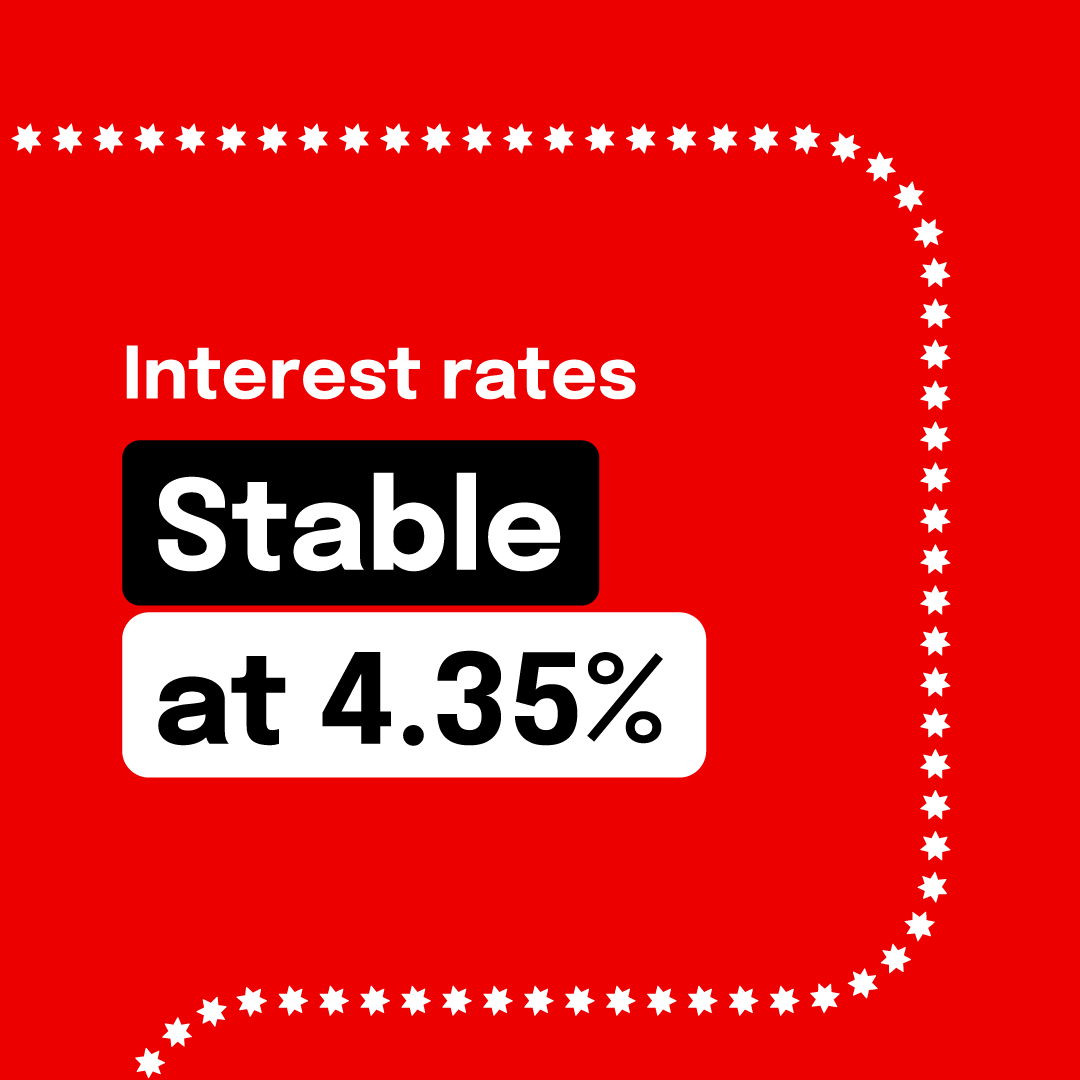
First rate cut forecast for November
The cash rate remains at 4.35% for now with little chance of further hikes, according to NAB Economics forecasts. That said, we’ll most likely have to wait until November before we see the first rate cut from the Reserve Bank – although if inflation continues to decline (helped by the recovery in supply-side issues and a more subdued growth in demand) the cash rate is likely to fall back to around 3% by the end of 2025.
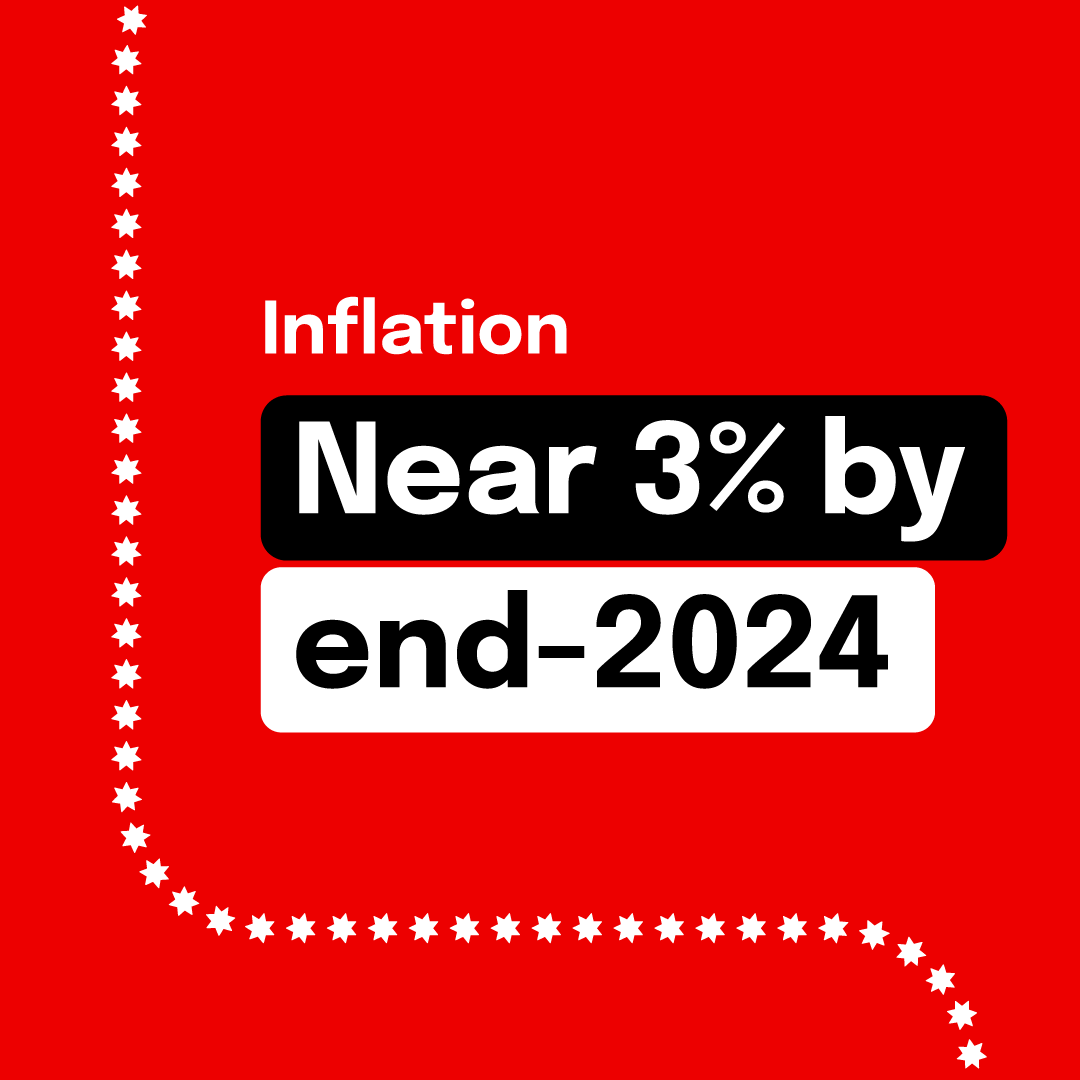
Inflation still in check
Recent figures indicate inflation will continue to make gradual progress towards the RBA’s target band, NAB Economics reports, returning to just over 3% by end-2024. However, Group Chief Economist Alan Oster warns further improvements are unlikely to be linear. He points out that there are still plenty of risks out there that might throw us off course – enough reason for the Reserve Bank to remain cautious when it comes to adjusting the cash rate.
Minimal growth but better times ahead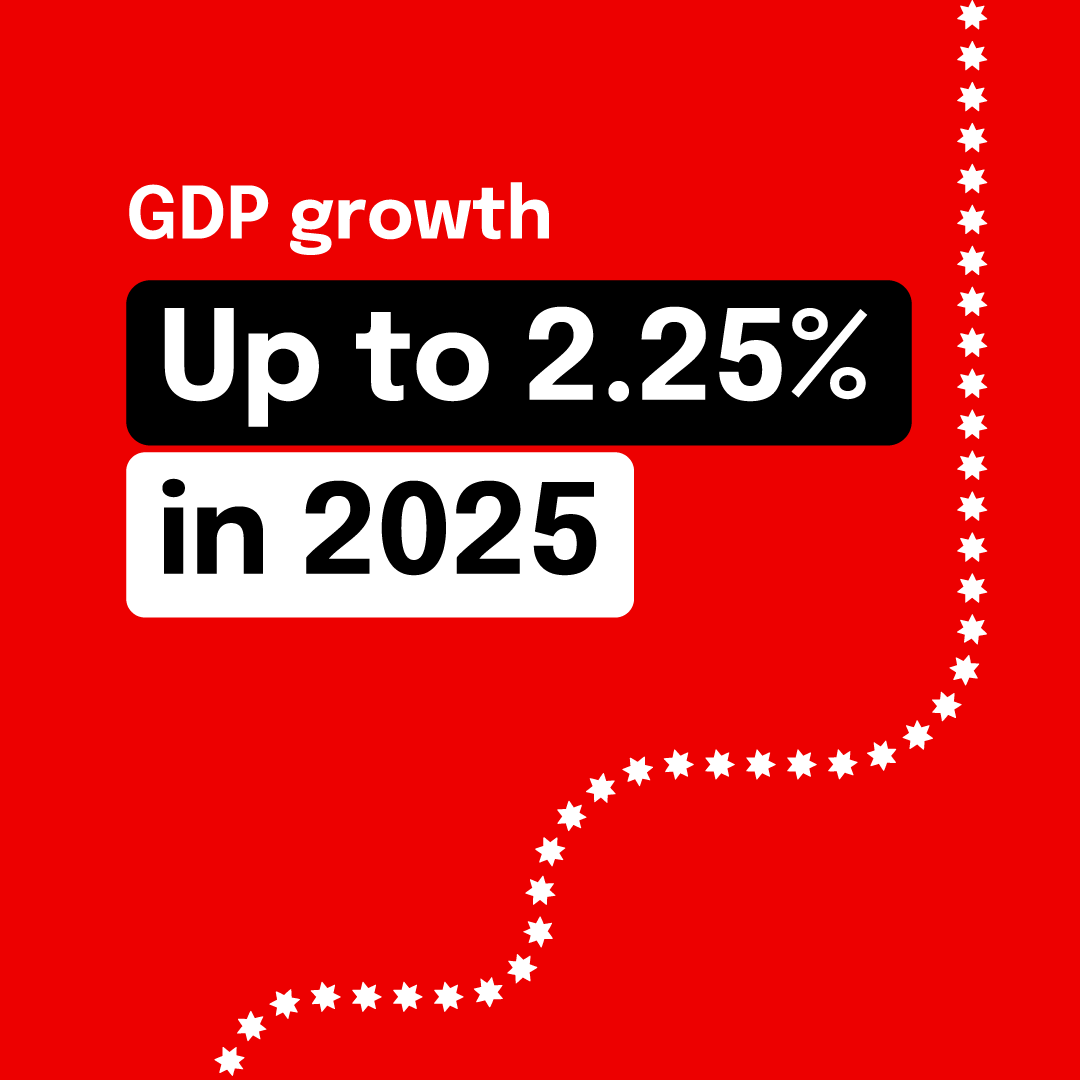
GDP growth was all but non-existent towards the end of 2023 – down to 0.2% in the fourth quarter, according to the recent National Accounts. So what about this year? While NAB Economics expects modest growth of 1.7%, there are signs of a better second half, thanks to a pick-up in household consumption as inflation improves. Meanwhile, the indications are for a stronger 2025 with growth at 2.25% for the year.
Business conditions take a turn for the better
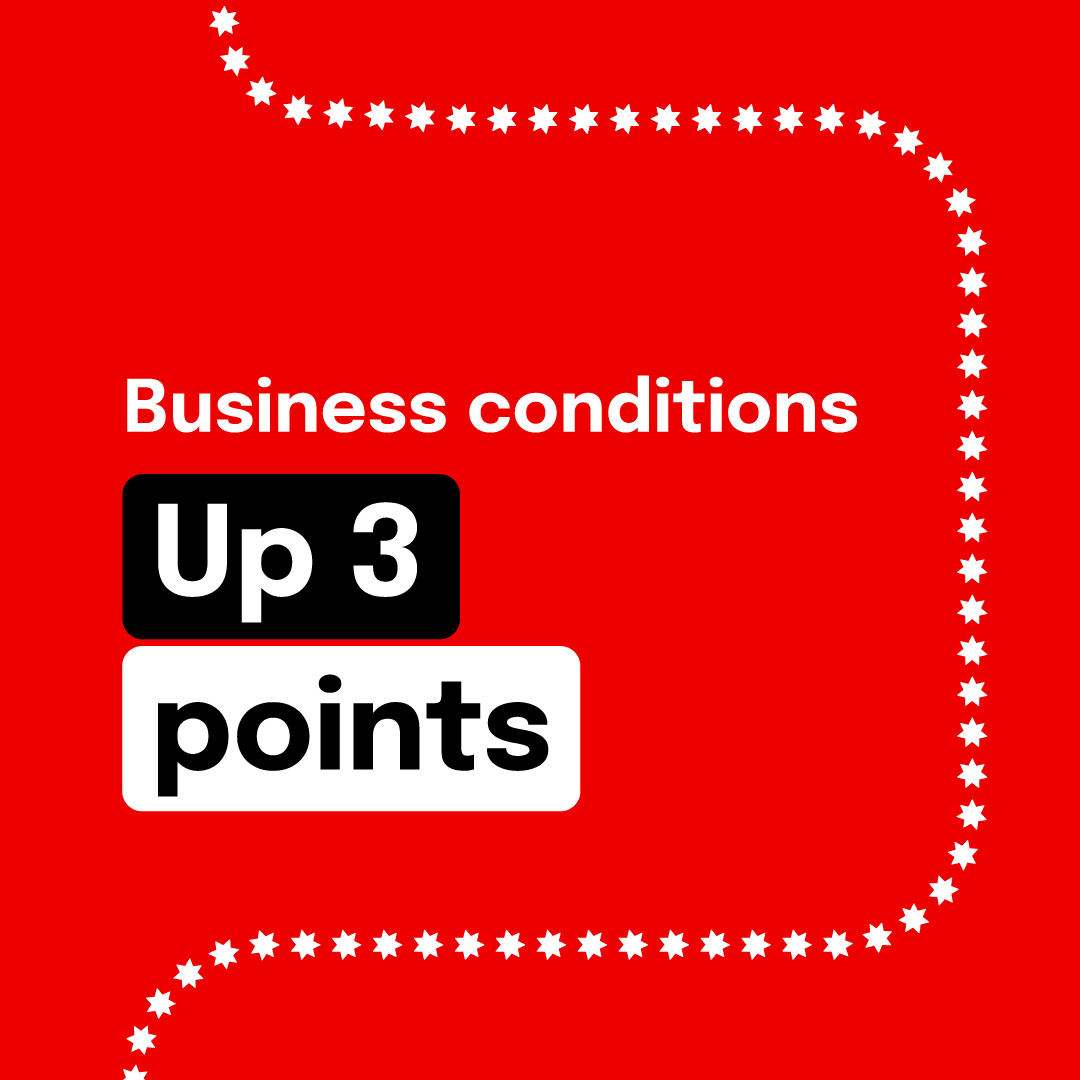
Last month, business conditions were up 3pts to +10 index points, a little above the long-run average. It helped that there was a rise in trading conditions and profitability. Both gained 4pts, according to NAB’s latest Monthly Business Survey. Nevertheless, business confidence remained low, as did forward orders – particularly for retail where conditions were also weak.
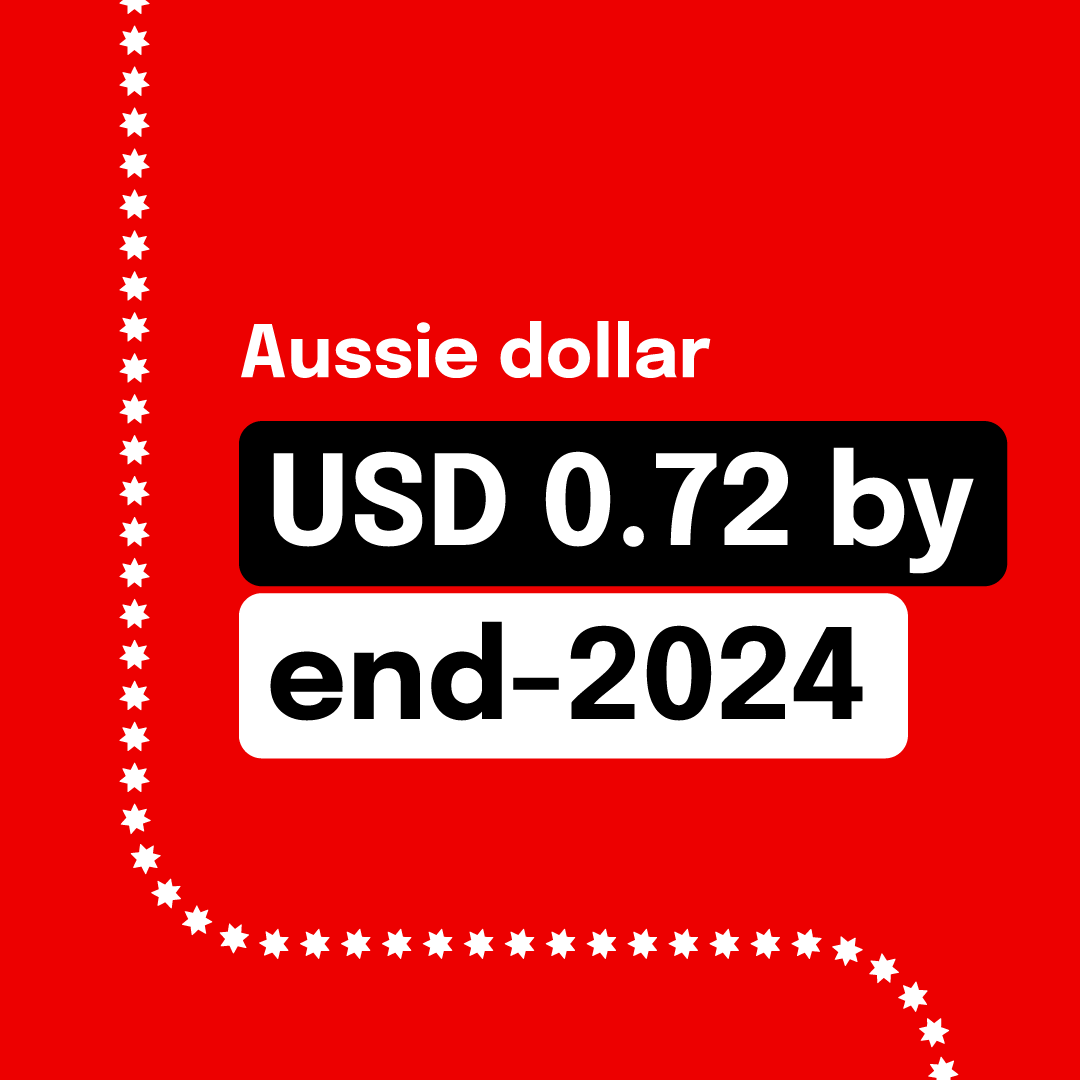
Aussie dollar expected to rise
The Australian dollar traded around US65c in March, largely reflecting the ongoing strength in the US economy. But given the US Federal Reserve is likely to start cutting its cash rate before our Reserve Bank does, NAB’s FX strategists believe the dollar will rise to US72c by the end of 2024, up to US78c by end-2025.
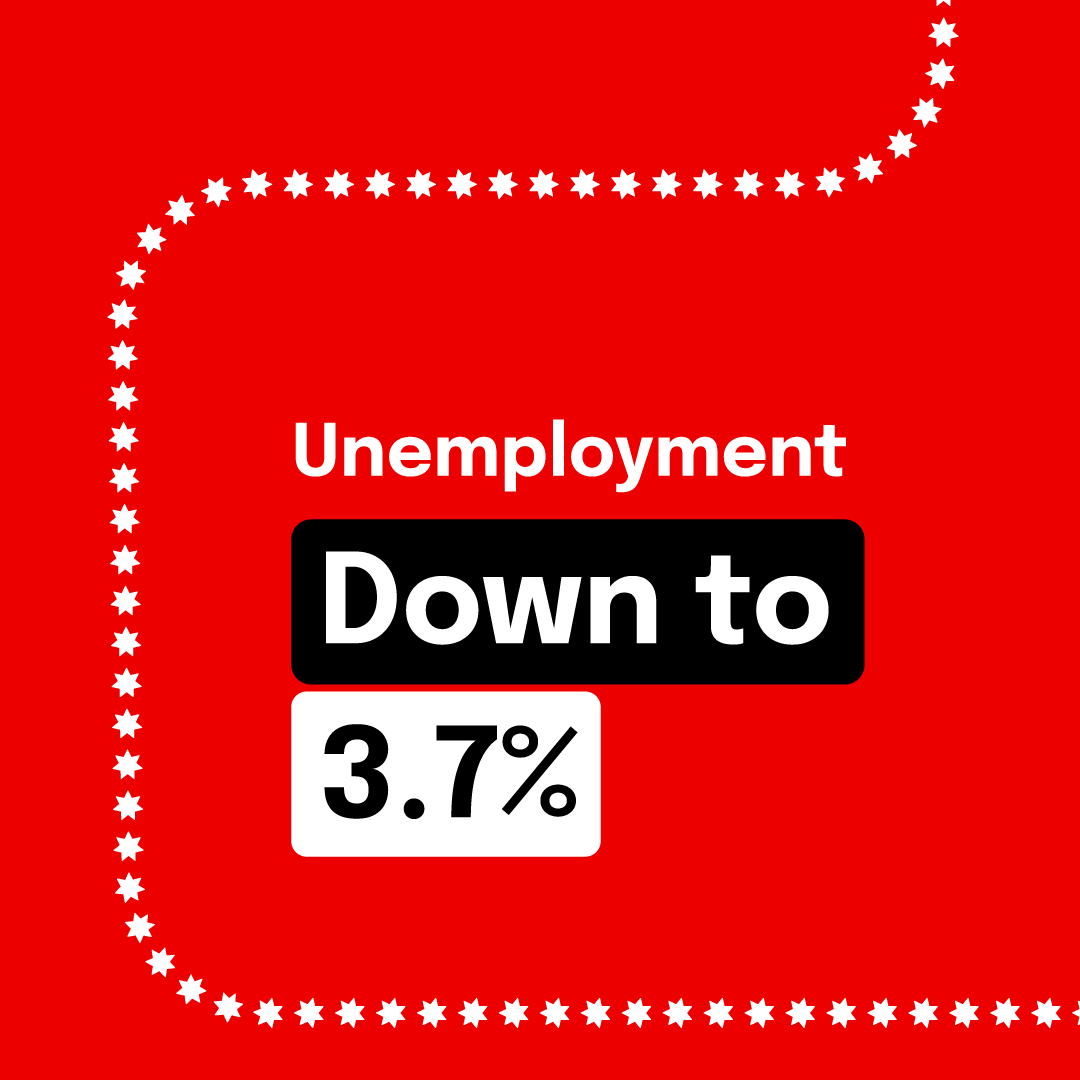
Unemployment back under 4%
There was good news recently when it came to the labour market. Unemployment fell to 3.7% in February, down from 4.1% in January. As Oster says, the improvement in February shows that the higher numbers in prior months were partly the by-product of seasonal factors – rather than a rapid deterioration in the labour market. And while unemployment is still likely to rise over the remainder of the year, outright declines in employment are unlikely.
Courtesy BUSINESS VIEW – NAB Business & Research Insights
In the early 2000s, accessing the internet was through a dial-up connection which could take anywhere from 30 seconds to a couple of minutes to establish a connection. In 2023, generative AI tools can generate poems, short stories and complex legal and medical documents in a matter of seconds.
The pace of technological change is accelerating and it’s reshaping just about every aspect of how we live, work, socialise and play. While Xero’s Future Focus research reveals small businesses are more optimistic, and even intrigued, about the potential of emerging technologies than doom and gloom, many wish there was more education and resources to navigate a rapidly changing world.
To help small businesses and their advisors plan ahead, I’ve looked at separating the hype from reality to uncover the top five technology trends that may impact the small business landscape in 2024.
Trend #1: The AI-augmented creativity boom
This year saw generative AI burst into the mainstream in what Axios’ Scott Rosenberg called the “most phenomenally successful act of rebranding in corporate history.” While language models are not new, the interactivity and accessibility of AI through tools like Stable Diffusion and ChatGPT signalled the biggest leap in the technology’s capabilities, helping businesses to create content easier and faster.
We’ve only scratched the surface of this technology and in 2024, while the hype might fade, more practical applications are likely to emerge relating to creative content, generative design and engineering. Currently, ChatGPT and other AI models are great at generating content from millions of examples of past works. But for creators or engineers looking for innovative solutions, you don’t want content that mimics an existing concept.
Next year we could well see a ‘creativity boom’ where AI models go beyond statistical similarity and come up with new designs or products that are far better than the ones that exist today. Continuing in its ability to augment (rather than replace) human intelligence, AI could truly become the co-pilot for creators, enabling them to set up the requirements such as manufacturing processes, loads and constraints, and then filtering a myriad of new ideas and design options.
Prompt engineering and the ability to work effectively with these AI models will continue to grow in importance and as a skill-set across all industries. The drawbacks around misinformation, copyright and bias will also need to be worked through in 2024, as the push for the commercially safe, transparent and ethical use of these AI systems comes to a head in jurisdictions around the world.
Trend #2: The rise of the augmented, conversational UI
When I first started using ChatGPT, what struck me was the change in the interaction mode. The promise of conversational user interface (UI) has been around for a while with Siri and Alexa, but it’s always been functional and instructional, never truly conversational. ChatGPT is not a better search engine — especially when it hallucinates answers — but it is becoming one of the first real, usable and intelligible chatbots.
In 2024, large language model-powered tools like ChatGPT will continue to revolutionise human-computer interaction, through the rise of API-enabled, conversational chatbots that are able to interact with customers. The ability for chatbots to have real-time conversations in any language to customers 24/7 and perform certain tasks at their request will unlock new opportunities for small businesses looking to handle customer inquiries or expand into new markets.
Google and Microsoft will continue to enhance their generative AI-powered capabilities and, if you believe the rumours, Apple could release its generative AI technology on the iPhone and iPad in late 2024. The new features could improve how Siri and the Messages app can field questions and auto-complete sentences, mirroring recent changes to the AI-enhanced overhaul of Amazon’s Alexa.
Trend #3: The metaverse finds a new source of power
The idea of living and working entirely in a virtual world as so often shown in the movies still feels fanciful, even comical. Yet advancements in 2023 in the technologies that underpin the concept of a metaverse, particularly in augmented and virtual reality, and significant investment by large technology companies — including the mixed reality ‘spatial computer’ headset by Apple — have brought some aspects of this ambitious vision closer to reality.
Will it be the breakthrough technology of 2024? It seems unlikely to reach full maturity next year. But I’m reminded of Bill Gates’ sentiments that: “We always overestimate the change that will occur in the next two years and underestimate the change that will occur in the next ten.” So, writing off the entire concept of the metaverse because of its relative immaturity when compared to the promise from science fiction might be premature.
I believe that some incarnation of the metaverse will be the next iteration of the internet, providing immersive, blended and connected experiences for everything from entertainment to education to virtual community building, and that it will introduce new concepts of ownership of digital assets. Many of these concepts will continue to evolve and emerge in 2024, with more small businesses innovating and exploring this space as some have started to do already this year.
Where once internet connectivity was once the main constraining factor for the metaverse, battery technology has quickly become a crucial component for its success, in my opinion. In 2024, we are likely to see significant development in lighter, cheaper and more efficient batteries to power the next generation of smartphones and headsets, and that will be key to also unlocking more immersive, mixed reality experiences in our everyday, on-the-go lives.
Trend #4: Carbon accounting the next frontier for compliance
We’re well into the critical decade of climate action and pressure will begin to mount on governments and industries to reduce their carbon emissions to meet the IPCC’s 2030 deadline. At the same time, the release of the sustainability standards by the International Sustainability Standards Board (ISSB) could see reporting on carbon emissions no longer be optional for businesses.
The ISSB standards could very well bring in a new era of compliance and become the basis of accounting standards in 2024. To avoid being locked out of corporate supply chains or providing inaccurate and misleading information on environmental or sustainability practices, small businesses will need to ensure they are accurately calculating and tracking their carbon emissions each year.
The integration of carbon accounting software into existing accounting platforms will see carbon accounting become an extension of financial accounting and reporting practices for small businesses. Our global partnership with Sumday is helping to democratise carbon accounting and upskill accountants and bookkeepers to provide this service. Xero small business customers can also find apps like Cogo, Ecologi and Greenly in the Xero App Store, allowing them to harness the data in their Xero ledger to measure and report their carbon emissions.
Trend #5: The rise of the super ecosystem, powered by connectivity
Connectivity between new and traditional players within the payments ecosystem is bringing in a new era of digital payment experiences for small businesses. Today, it allows the real-time validation of e-invoices against government regulations and tax requirements, to help small businesses send bills over the internet and get paid faster. It also ensures the seamless transmission of data between banks and third-party providers, to enable instant access to financial information and services.
In 2024, global platforms like Apple, Amazon, Google and Microsoft will continue to make their products work better together. Why? Because people are tired of using lots of different apps for different things. They want everything in one place, working smoothly together. Rather than the rise of the ‘super-app’, we’ll see the power of the ‘super ecosystem’ — the interconnectedness of financial services that make it easier to pay bills, transfer money and manage finances together in one spot.
Digitally distributed technology, like blockchain and web3 platforms, could be building blocks for new payment innovations when coupled with concepts like self-sovereign/decentralised identity to help people share their identity and other data more securely.
Small steps to an exciting future
While some of these tech trends might take years (or even decades) to realise the full scope of their impact on the world, the first steps into that future are being taken now. And next year, it would be a good idea for small businesses and their advisors to continue to keep an eye on developments in these five trends, as they will no doubt play a major role in shaping the future themselves.
Courtesy FUTURE FOCUS – A XERO Series by James Bergin, EGM – Technology Strategy & Integration, Xero
It’s not uncommon for business owners to pour their money into a business to get it up and running and to sustain it until it can survive on its own. A recent case highlights the dangers of taking money out of a company without carefully considering the tax implications.
A case before the Administrate Appeals Tribunal (AAT) was a loss for a taxpayer who blurred the lines between his private expenses and those of his company.
The taxpayer was a shareholder and director of a private company that operated a business. Over a number of years, he made withdrawals and paid personal private expenses out of the company bank account, but the amounts were not recognised as assessable income.
Following an audit, the ATO assessed the withdrawals and payments as either:
- Ordinary income assessable to the taxpayer, or
- Deemed dividends under Division 7A.
Division 7A contains rules aimed at situations where a private company provides benefits to shareholders or their associates in the form of a loan, payment or by forgiving a debt. If Division 7A is triggered, then the recipient of the benefit is taken to have received a deemed unfranked dividend for tax purposes.
The taxpayer tried to convince the AAT that the withdrawals were repayments of loans originally advanced by him to the company and therefore should not be assessable as ordinary income. Alternatively, he argued that the payments were a loan to him and there was no deemed dividend under Division 7A because the company did not have any “distributable surplus” (a technical concept which limits the deemed dividend under Division 7A).
The AAT found issues with the quality of the taxpayer’s evidence, concluding that he failed to prove that the ATO’s assessment was excessive. This was based on a number of factors, including:
- The taxpayer produced a number of different iterations of his financial affairs and tax return.
- He could not satisfactorily explain how he was able to fund the original loans to the company, especially given he had declared tax losses in multiple years around the time when the loans were made.
While the taxpayer had tried to explain that some of his loans to the company were sourced originally from borrowings from his brother, the AAT considered this was implausible given the brother’s own tax return showed modest income.
So, how should a contribution from a company owner to get a business up and running be treated? It really depends on the situation, but for small start-ups, the common avenues are:
- Structure the contribution you make as a loan to the company, or
- Arrange for the company to issue shares, with the amounts paid being treated as share capital.
In making a decision on which is the best approach, it is necessary to consider a range of factors, including commercial issues, the ease of withdrawing funds from the company later and regulatory requirements.
The way you put money into the company also impacts on the options that are available to subsequently withdraw funds from the company. However, the key issue to remember is that if you take funds out of a company then there will probably be some tax implications that need to be carefully managed.
From 1 July 2024, the amount you can contribute to super will increase. We show you how to take advantage of the change.
The amount you can contribute to superannuation will increase on 1 July 2024 from $27,500 to $30,000 for concessional super contributions and from $110,000 to $120,000 for non-concessional contributions.
The contribution caps are indexed to wages growth based on the prior year December quarter’s average weekly ordinary times earnings (AWOTE). Growth in wages was large enough to trigger the first increase in the contribution caps in 3 years.
Other areas impacted by indexation include:
- The Government super co-contribution – Income threshold
- The super guarantee maximum contribution base (the limit for compulsory super guarantee payments)
- The tax-free thresholds for redundancy payments
- The CGT contribution cap (amount that can be contributed to super following the sale of eligible business assets)
For those with the disposable income to contribute, superannuation can be very attractive with a 15% tax rate on concessional super contributions and potentially tax-free withdrawals when you retire. For business owners who might have had an exceptional year or sold their business, it’s an opportunity to get more into super. However, the timing of contributions will be important to maximise outcomes.
If you know you will have a capital gains tax liability in a particular year, you may be able to use ‘catch up’ contributions to make a larger than usual contribution and use the tax deduction to help offset your capital gain tax bill. But, this strategy will only work if you meet the eligibility criteria to make catch up contributions and you lodge a Notice of intent to claim or vary a deduction for personal super contributions, with your super fund.
Using the bring forward rule
The bring forward rule enables you to bring forward up to 2 years’ worth of future non-concessional contributions into the year you make the contribution – this is assuming your total superannuation balance enables you to make the contribution and you are under age 75.
If you utilise the bring forward rule before 30 June, the maximum that can be contributed is $330,000. However, if you wait to trigger the bring forward until on or after 1 July, then the maximum that can be contributed under this rule is $360,000.
‘Catch up’ contributions
If your super balance is below $500,000 on the prior 30 June, and you want to quickly increase the amount you hold in super, you can utilise any unused concessional super contributions amounts from the last 5 years.
Let’s look at the example of Gary who has only been using $15,000 of his concessional super cap for the last few years. Gary’s super balance at 30 June 2023 was $300,000, so he is well within the limit to make catch up contributions.
| Concessional Cap | Used | Unused | |
| 2018-19 | $25,000 | $15,000 | $10,000 |
| 2019-20 | $25,000 | $15,000 | $10,000 |
| 2020-21 | $25,000 | $15,000 | $10,000 |
| 2021-22 | $27,500 | $15,000 | $12,500 |
| 2022-23 | $27,500 | $15,000 | $12,500 |
| 2023-24 | $27,500 | ? | ? |
Gary could access his $27,500 concessional cap for 2023-24 plus the unused $55,000 from the prior 5 financial years.
If Gary doesn’t access the unused amounts from 2018-19 by 30 June 2024, the $10,000 will no longer be available.
Transfer balance cap unchanged
The general rate for the transfer balance cap (TBC), that limits how much money you can transfer into a tax-free retirement account, will remain at $1.9 million for 2024-25. The TBC is indexed by the December consumer price index (CPI) each year.
Revised stage 3 tax cuts confirmed for 1 July
The revised stage 3 tax cuts have passed Parliament and will come into effect on 1 July 2024.
Before the new tax rates come into effect, check any salary sacrifice agreements to ensure that they will continue to produce the result you are after.
Resident individuals
| Tax rate | 2023-24 | 2024-25 |
| 0% | $0 – $18,200 | $0 – $18,200 |
| 16% | $18,201 – $45,000 | |
| 19% | $18,201 – $45,000 | |
| 30% | $45,001 – $135,000 | |
| 32.5% | $45,001 – $120,000 | |
| 37% | $120,001 – $180,000 | $135,001 – $190,000 |
| 45% | >$180,000 | >$190,000 |
Non-resident individuals
| Tax rate | 2023-24 | 2024-25 |
| 30% | $0 – $135,000 | |
| 32.5% | $0 – $120,000 | |
| 37% | $120,001 – $180,000 | $135,001 – $190,000 |
| 45% | >$180,000 | >$190,000 |
Working holiday markers
| Tax rate | 2023-24 | 2024-25 |
| 15% | 0 – $45,000 | 0 – $45,000 |
| 30% | $45,001 – $135,000 | |
| 32.5% | $45,001 – $120,000 | |
| 37% | $120,001 – $180,000 | $135,001 – $190,000 |
| 45% | >$180,000 | >$190,000 |
Late last year, thousands of taxpayers and their agents were advised by the Australian Taxation Office (ATO) that they had an outstanding historical tax debt. The only problem was, many had no idea that the tax debt existed .
The ATO can only release a taxpayer from a tax debt in limited situations (e.g., where payment would result in serious hardship). However, sometimes the ATO will decide not to pursue a debt because it isn’t economical to do so. In these cases, the debt is placed “on hold”, but it isn’t extinguished and can be re-raised on the taxpayer’s account at a future time. For example, these debts are often offset against refunds that the taxpayer might be entitled to. However, during COVID, the ATO stopped offsetting debts and these amounts were not deducted.
In 2023, the Australian National Audit Office advised the ATO that excluding debt from being offset was inconsistent with the law, regardless of when the debt arose. And by this stage, the ATO’s collectible debt had increased by 89% over the four years to 30 June 2023.
The response by the ATO was to contact thousands of taxpayers and their agents advising of historical debts that were “on hold” and advising that the debt would be offset against any future refunds. These historical debts were often across many years, some prior to 2017, and ranged from a few cents to thousands of dollars. For many, the notification from the ATO was the first inkling they had of the debt, because debts on hold are not shown in account balances as they have been made “inactive”. In other words, taxpayers were accruing debt but did not know as the debts were effectively invisible because they were noted as “inactive.”
In a recent statement, the ATO said: “The ATO has paused all action in relation to debts placed on hold prior to 2017 whilst we review and develop a pragmatic and sensible way forward that takes into account concerns raised by the community.
It was never our intention to cause frustration or concern. It’s important to us that taxpayers have trust in our tax system and our records.”
For any taxpayer with a debt on hold, it is important to remember that just because the ATO might not be actively pursuing recovery of the debt, this doesn’t mean that it has been extinguished.
Small business tax blows out
Out of the $50bn in collectible debt owing to the ATO, two thirds is owed by small business. As of July 2023, the ATO moved back to its “business as usual” debt collection practices. For entities with debts above $100,000 that have not entered into debt repayment terms with the ATO, the debt will be disclosed to credit reporting agencies.
If your business has an outstanding tax debt, it is important to engage with the ATO about this debt. Hoping the problem just goes away will normally make things worse.
The Fringe Benefits Tax year (FBT) ended on 31 March. We explore the problem areas likely to attract the ATO’s attention.
Electric vehicles causing sparks
In late 2022, the Government introduced a concession that enables employers to provide some electric vehicles to employees without incurring the 47% fringe benefits tax (FBT) on private use.
The exemption applies to the use of electric cars, hydrogen fuel cell electric cars or plug-in hybrid electric cars if:
- The value of the car is below the luxury car tax (LCT) threshold for fuel efficient vehicles ($89,332 for 2023-24 financial year) at the time it is first sold in a retail sale; and
- The car is both first held and used on or after 1 July 2022.
If your business is planning on acquiring an electric vehicle, be aware that from 31 March 2025, the FBT exemption will no longer apply to plug-in hybrid electric vehicles unless the vehicle met the conditions for the exemption before this date and there is already a binding agreement to continue to use the vehicle privately after this date.
The problems areas
The exemption only applies to employees. For the FBT exemption to apply, the vehicle needs to be supplied by the employer to an employee (including under a salary sacrifice agreement). Partners of a partnership and sole traders are not employees and cannot access the exemption personally.
If LCT applies to the car it will never qualify for the FBT exemption. For example, if the EV failed the eligibility criteria in 2022-23 when it was first purchased because it was above the luxury car limit of $84,916, the fact that it resold in 2023-24 for $50,000 does not make it eligible for the exemption on resale. Likewise, if the car was used by anyone (including a previous owner) before 1 July 2022 then it will probably never qualify for the FBT exemption.
Home charging stations are not included in the exemption. The FBT exemption includes associated benefits such as registration, insurance, repairs or maintenance, but it does not include a charging station at the employee’s home. If the employer instals a home charging station at the employee’s home or pays for the cost, then this is a separate fringe benefit.
FBT might not apply but you do the paperwork as if it did. While the FBT exemption on EVs applies to employers, the value of the fringe benefit is still taken into account when working out the reportable fringe benefits of the employee. That is, the value of the benefit is reported on the employee’s income statement. While you don’t pay income tax on reportable fringe benefits, it is used to determine your adjusted taxable income for a range of areas such as the Medicare levy surcharge, private health insurance rebate, employee share scheme reduction, and certain social security payments.
What about the cost of electricity? The ATO’s short-cut method can potentially be applied to calculate reportable fringe benefit amounts and applies a rate of 4.20 cents per kilometre. If you are not using the short-cut method, you need to have a viable method of isolating and calculating the electricity consumption of the car.
The exemption does not apply if the employee directly purchases or leases the EV. If an employee purchases or leases the EV directly, and the employer reimburses them under a salary sacrifice arrangement, the FBT exemption does not apply because this is not a car fringe benefit. However, the exemption can potentially apply to novated lease arrangements if they are structured carefully.
Not all electric vehicles are cars. To qualify for the exemption, the EV needs to be a car – electric bikes and scooters do not count, nor do vehicles designed to carry a load of 1 tonne or more or that carry 9 passengers or more.
Other FBT problem areas
Not registering. If you have employees, it is unusual not to provide at least some fringe benefits. If your business is not registered for FBT but you have provided entertainment, salary sacrifice arrangements, forgiven debts, paid for or reimbursed private expenses, or have provided accommodation or living away from home allowances, it’s important that the FBT position is reviewed carefully. The ATO targets businesses that aren’t registered for FBT.
When employees travel. There has been a renewed focus recently on whether employees are travelling in the course of performing their work (deductible and not subject to FBT) or travelling from home to their place of work (not deductible and subject to FBT). The Federal Court decision in the Bechtel Australia case is a good example. The case dealt with the travel of fly-in-fly-out workers between home and their worksite – involving flights, ferry and bus travel. The Court found that the employees were travelling before they commenced their shift and that the employer was liable for FBT in connection with the transport that was provided. The case highlights the need for employers to ensure that they are fully aware of the connection between work and travel.
« Previous Page — Next Page »