Stay alert to increasingly sophisticated scams
April 2, 2026We are seeing a noticeable increase in the number and sophistication of scams targeting both individuals and businesses. Recently, one of our clients received an email designed to look like official correspondence from the Australian Taxation Office.
As you can see from the example below, the presentation is highly professional, using familiar branding, formatting and language to create a strong sense of legitimacy.
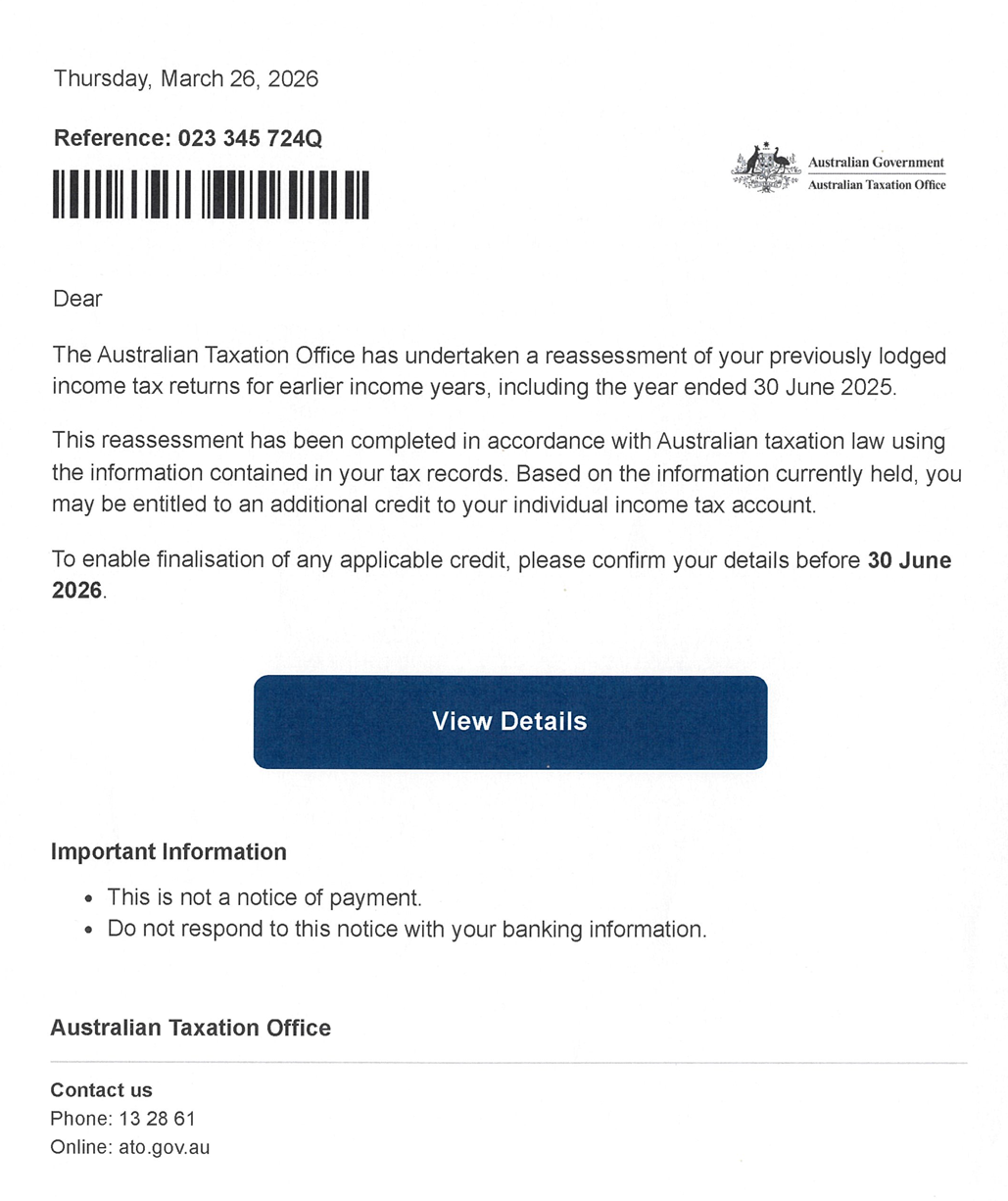
These types of scams are no longer easy to identify at a glance. Gone are the days of poorly written emails with obvious spelling errors. Today’s scammers are investing significant time and effort into replicating official documents, complete with reference numbers, logos and realistic messaging.
Their objective is simple: to create urgency and trust so that recipients act quickly without questioning the authenticity of the communication.
Common tactics include advising of refunds, reassessments, unpaid accounts or requests to “confirm details” via a link. These links often lead to very convincing fake websites designed to capture personal information, login credentials or banking details.
It is important to understand that these scams are not limited to the ATO. We are seeing similar approaches used in communications appearing to come from banks, utility providers and other government agencies. Both individuals and businesses are being targeted, and the financial and personal consequences can be significant.
A key point to remember is that legitimate organisations, including the ATO, will generally not request sensitive information or direct you to click on links in unsolicited emails or messages. Any unexpected communication that creates urgency or asks you to take immediate action should be treated with caution.
If you receive a communication like this, DO NOT click on any links, do not download attachments and do not provide any personal or financial information. Take a moment to pause and assess the situation.
If there is even a small doubt in your mind, play it safe and verify the communication independently. Contact the ATO, your bank or your utility provider directly using trusted methods such as calling their official phone number or visiting in person. Do not rely on the contact details provided in the message itself.
Remaining vigilant is your best defence. A few extra minutes of caution can prevent significant financial loss and stress.
Scam red flags to watch for
- Unexpected messages about refunds, reassessments or urgent payments
- Pressure to act quickly or deadlines that create urgency
- Requests to “confirm” or update personal, tax or banking details
- Links or buttons prompting you to click through to “view details”
- Emails or messages that appear official but come from unusual or unfamiliar addresses
- Attachments you were not expecting
- Generic greetings such as “Dear customer” instead of your name
- Slight variations in logos, formatting or wording compared to genuine communications
- Contact details that do not match official websites or previous correspondence
- Any request for sensitive information via email or SMS
When in doubt, DO NOT act on the message. Verify it independently using trusted contact details.
Contact Indigo Financial on (08) 8212 8585 if you need help with any of your accounting, taxation and business development needs.
Note: The material and contents provided in this publication are informative in nature only. It is not intended to be advice and you should not act specifically on the basis of this information alone. If expert assistance is required, professional advice should be obtained.
Back to News Page